Monday, July 21, 2014

One Year Later - Why Sunbather was 2013's most overrated release

     
    About a year ago, San Fransisco post-black act Deafheaven released their sophomore album Sunbather, and the world blew the fuck up. The metal press lit up simultaneously with gushing praise for the album and condemnation of the shadowy 'black metal elitist' who would invariably condemn the album as 'untrve', or whatever. Other publications fared no differently, throwing disgusted comments towards the strawman of black metal fans while smugly preaching that enjoying the 'high art' of Sunbather somehow put them on a higher level than greasy long-haired Burzum worshipers. Noisey even penned an entire article whining about how being aware of the band didn't necessarily make you a black metal aficionado - and the author's dismissal of Inquisition cements this.

    Since then, Deafheaven shows have drawn a motley, almost comedic crowd. On their most recent tour with Pallbearer, I was praised for my denim vest about as much as thrown a contemptuous glance from some rail-thin, unsmiling Bohemian. In February, when they opened for Between the Buried and Me, the predominantly metalhead crowd spent most of the night unabashedly laughing at George Clarke's bizarre, vaguely sexual stage antics. 

    Now, this is not a rant about the appropriation of black metal by long-faced American hipsters (who, for what it's worth, write some really cool stuff). This is not a hand-wringing about metal's emasculation and a panegyric to bands like Blasphemy and Midnight. This is not even a condemnation of Deafheaven's music, because Sunbather is, by all accounts, an incredibly well-written and intricate record.

     This is a protracted sigh at how everyone got so excited over what, at the end of the day, is post-black's most accessible, least impressive representative. I'll admit that I loved Sunbather, and wholeheartedly joined in the hype the record left in its wake, but as time wore on and I plumbed the depths of the genre, I found myself confronted with an uncomfortable truth: not only was Deafheaven just the tip of the iceberg, but the band are utterly featureless when compared to their compatriots.

     Post-black metal has a checkered history, and only really came into its own at the tail end of the 2000s, when Neige of Peste Noire left the xenophobic black metal group to form what would come to be the gold standard in the genre, Alcest. Neige's masterful weaving of bleary-eyed shoegaze with the strident guitarwork and emotional heaviness of black metal was utterly without precedence.

     Alcest's 2005 EP Le Secret and 2007 full-length Souvenirs d'Un Autre Monde represented the first successful marriage of black metal with a genre outside the umbrella of heavy metal. Weakling briefly experimented with this formula in the late 90s, but the project vanished after their 2000 debut Dead as Dreams. Alcest approached the genre fusion from the vantage point of wistful shoegaze, but from the fiery, windswept black metal half came Ireland's Altar of Plagues, who pushed atmospheric black metal to its extreme limits by using post-rock's grandiose scale instead of more traditional synthesizers.
      Altar of Plagues' choice wasn't as groundbreaking as Alcest's (Agalloch's The Mantle (2001) saw the marriage first explored) but it nevertheless managed to put a new twist on atmospheric black metal. More generally, Altar of Plagues and Alcest were toying with what would become post-black metal.


      Both of these groups were well-established before Deafheaven was even a thought, and long before Libertine Dissolves saw the light of day. But when Deafheaven did come around with 2011's Roads to Judah, not only did the record garner mixed reviews, but it became clear the band were content to be a textbook example of post-black metal and not explore either influence any deeper than they had to.

     Sunbather continued this trend. The band developed catchier riffs, moved the snare to the back of the mix so the music would be more accessible, and didn't plumb any deeper than they had to into black metal or shoegaze. And everyone went nuts. In many ways, it's understandable. For someone who has never dabbled in black metal, Sunbather provided the perfect starting point, and it's undeniable that the band are excellent songwriters.

    Beyond that, however, praise for Sunbather doesn't seem to make much sense. From a post-black context, Deafheaven take no risks. Now, this wouldn't be as much of an issue if the genre's paragons weren't known for doing just that. Altar of Plagues' swansong Teethed Glory and Injury (released, incidentally, the same month as Sunbather) toyed with electronics and steered clear of the safety of expansive atmospherics the band had perfected. Deafheaven's San Fransisco compatriots in Bosse-de-Nage have been slamming black metal into post-hardcore for years now. France's The Great Old Ones subtly insert psychedelics into their Lovecraftian take on the genre.

   At the same time, post-black metal is utterly clogged and oversaturated with mediocre Alcest clones, what amounts to DSBM with more synth, and slightly airy black metal. These are the bands that refuse to take risks, blindly following Alcest and succeeding in going nowhere. Sunbather's catchiness and mainstream appeal, however, saved Deafheaven from being delegated to this category.

   Beyond the band's musical mediocrity, however, is the reaction Sunbather elicited. While the 'hipster half' of Deafheaven's fanbase was unanimous in its tearful praise, metalheads, as they're wont to do, devolved into bickering over whether the band was metal, whether it was black metal, whether it was a good release, with most of it being fingerpointing at stereotypical black metal 'elitism'. The band, for what it's worth, don't really seem to care what people label them as, but as the debate continues a year and some later, it's thrown into relief that people desperately want Sunbather to be not just a black metal record, but a good black metal record: a modern classic, one that will reinvent the stubborn black metal wheel as much as Rennihilation was supposed to a few years back (aside: has anyone heard anything about Liturgy recently? They still writing manifestos?).

    This push makes no sense on multiple levels. Firstly, Sunbather is utterly orthodox both within a black metal and a shoegaze context. It's a mighty beast of a record, to be sure, but the band are impassively rooted in playing frenetic black metal with a reverb pedal. Unless their next release sees them taking a more progressive direction, Sunbather will be Deafheaven's fifteen minutes of fame, and the new trend in black metal will come from another direction (I'm personally hoping for more psychedelic stuff in the vein of Oranssi Pazuzu, but I digress).

     Secondly, black metal made by hipsters has never caught on as a trend. As I said before, Liturgy was supposed to be the vanguard for a wave of 'transcendental black metal' bands, but none came. Weakling's transient lifespan failed to trigger much of anything until nearly a decade after their breakup. Even a year after the thunderous success of Sunbather, we have seen precisely zero acts attempting to imitate Deafheaven's style. Modern innovations in black metal are the result of primarily metal fans - Alcest (as said before), Blut Aus Nord, and Nachtmystium spring to mind as some modern visionaries.

      This occurs when artists try and put the cart before the horse - that is, having an artistic vision without the musical wherewithal to support it fully. Hunter Hunt-Hendrix's manifesto, George Clarke's tear-jerker on how seeing a sunbather in a wealthy neighborhood inspired him to write Sunbather...all truly beautiful muses, but without the ability to stand on your own two feet musically, you won't get anywhere beyond fifteen minutes of fame.

      Lastly, why is there such a conscious need for Deafheaven to fall squarely into a box? Genres are a fluid concept, they act as taxonomical guidelines, not absolute rules to be clung to. Metal, with its various genres and subgenres, has struggled with this issue for years. An artist's genre denomination is zero indicator of anything short of artistic description, and Deafheaven are no different. What's more, innovation in music is an organic event. Fenriz and Varg Vikernes have both sworn that black metal was never supposed to 'become a trend', and were actually chagrined to see it catch on. If Sunbather pioneers anything, as unlikely as I think it to, it won't be because of their fans' clamoring.

      In conclusion I'd like to say that my views on Deafheaven's music are as a whole quite positive - I enjoy all of their work, and find their ability to conjure up summer sunshine wonderful. My primary issue with the band isn't the now-hackneyed "NOT TRVE" argument, it's the sheer flood of unending praise the band have faced for the past year. Sunbather was an excellent record, but it is in no way pushing metal in any direction whatsoever.


Tuesday, July 15, 2014

Electric Wizard's new song is a return to doom


      Seminal British stoner doom act Electric Wizard, hot on the tail of announcing their newest album in three years Time To Die (to be released September 30th by the band's own Spinefarm Records), have debuted a single from the album entitled 'I Am Nothing'. Electric Wizard received mixed praise and flak for taking their music in a more psych-rock-like direction with their last two albums, but if 'Time To Die' is any indication of the Wiz' upcoming work, those disappointed by Witchcult Today and Black Masses can forget the records ever happened.
      'I Am Nothing' hearkens to the band's early 2000s pure doom approach - the hazy, stoned atmosphere of Dopethrone eschewed in favor of Jus Osborn's eerie, soaring clean vocals and stentorian doom riffs that seem to send out shockwaves whenever they hit. Hints of psychedelic start to seep into the music near the end of the song, but for the most part 'I Am Nothing' plays like a We Live-era Wiz song. 
     Fans of the band often point to the 2000s as the time when Electric Wizard lost the magic touch they had in the 90s with their self-titled and the mind-frying Come My Fanatics... (and Dopethrone, of course). But for as much as 'I Am Nothing' echoes that period, it equally lapses into the almost drone-like sections and squealing solos of the band's early work. 
     You can stream 'I Am Nothing' below:


Monday, July 7, 2014

Missing Cult of Luna? Check out Johannes Persson's new band Riwen


         Cult of Luna, the acclaimed Swedish post-metal act who went on indefinite hiatus after last year's monumental Vertikal, draw influence from a variety of sources, from the hazy, violent assault of Neurosis to Godspeed's more crushing drone sections. The band members themselves are prolific musicians and artists, with vocalist Johannes Persson scoring films, writing books, and thus infusing Cult of Luna's albums with an artistic sensibility that makes each listen more fascinating than the next.
        To this end, Persson has debuted a preview of his new band Riwen. From the 50-second clip, it's impossible to get an accurate picture of the band's musical direction, although it seems to hearken back to Cult of Luna's more hardcore-drenched days (their 2001 self-titled, notably). Persson labels the act 'hardcore', though, so in all likelihood this direction is possible.
         You can stream the 50-second preview below, and like Riwen on facebook here.

Wednesday, June 25, 2014

Solstafir, WITTR, and Pallbearer premiere new songs


       Imagine my giddiness this morning when not one, not two, but three of my favorite metal acts have put forward new material! I'm a little late to the party with the new Solstafir song 'Lágnætti', which debuted a few days ago via SoundCloud, but 'Lágnætti' is just as beautiful and emotional as you'd expect from the band at this point. The song revolves around a heart-wrenching, minimalist piano until the song's three minute mark, when droning post-metal elements make their return. It sounds almost as though the band are using an E-bow at times, and as the song crescendoes, the piano making a return, I can't help but get more excited for Otta. Stream 'Lágnætti' via Terrorizer here.

Otta will be released via Season of Mist on September 2nd.


         Arkansas' Pallbearer, two years after their monolithic debut full-length Sorrow & Extinction are gearing up for their newest release Foundations of Burden, which will be released this August via Profound Lore. I was lucky enough to see the band play 'The Ghost I Used To Be' live with Deafheaven a few weeks ago (to a crowd of apathetic hipsters, but I digress), and the band have debuted the track for everyone to hear. 'Ghost' maintains Pallbearer's mighty traditional doom riffing, interspersed with sparkling psychedelic solos, and in its latter minutes moves into a moodier, more subdued passage. As with everything else the band have debuted, it's well-worth a listen if only for its sheer intricacy. Foundations of Burden will be released via Profound Lore on August 19th via Profound Lore.

You can stream 'The Ghost I Used to Be' below:


Lastly, and ironically enough the shortest song, Wolves in the Throne Room have debuted a new song from their upcoming EP Celestite, entitled 'Initiation at Neudeg Alm'. At a little over five minutes, 'Initiation' seems a much more straightforward thought, veering between thick, stormy guitars that Greg Anderson would salivate over and ritualistic synths that add more color. Nevertheless, 'Initiation' remains just as cosmic and trance-inducing as Wolves in the Throne Room's previous black metal material - and the addition of distorted guitars contributes heavily to this. Celestite will be released via the band's own Artemisia Records on July 9th.

Stream 'Initiation at Neudeg Alm' below: 


Sunday, June 22, 2014

Halfway Retrospective - My Top 10 Albums of 2014 (so far)

This has been quite a year for music, overall, and it's only half done! Here, I'll be talking about some of my favorite releases of the year so far.


1.  Have a Nice Life - The Unnatural World
     Genre: Shoegaze
         Back in 2008, Connecticut shoegaze duo Have a Nice Life released Deathconsciousness - a massive double album that infused shoegaze and post-punk's airiness with the depressive atmosphere of extreme metal, received the acclaim of critics the world over...and abruptly vanished. Deathconsciousness hasn't seen another repressing since, and despite an EP appearing briefly two years later, many considered the reclusive group gone forever.
           Until, abruptly, this past January saw the release of Have a Nice Life's sophomore outing The Unnatural World. At once somehow more melancholic, dark, and twisted than previous outings, the record delves deeper into both sides of Have a Nice Life's winning, genre-bending formula with post-punk songs such as 'Defenestration Song' and 'Dan and Tim, Reunited by Fate' contrasting with bleak, flighty drone sections like 'Music Will Untune the Sky' or 'Cropsey'. Yet there's always the omnipresent element of shoegaze bliss (if you can call it that on this record) that throws everything for a loop, soothing the rock and lending flight to the drone.
         This is a sorrowful, beautiful record that spans the genre gap between metal and shoegaze in an ingenious way, avoiding the now-clogged trail blazed by Alcest by, simply enough, playing extensively heart-wrenching shoegaze. Fans of both extreme metal and Slowdive will rejoice, and the six years since Deathconsciousness have been well worth it.

2. Thou - Heathen
     Genre: Sludge Metal

       Heathen is only Thou's fourth full-length, despite a veritable library of splits, EPs, compilations, and everything in between since the band's inception in the mid 2000s. I raved about this record back when it surfaced in February and relistening to it today, much of what I said still stands: this is the band at their most vacuous, monolithic, and downright pulverizing. Heathen is an absolute monster of a record, churning
tortuously through ten tracks with a funeral doom-like sensibility.
        The band's precise balance of sludge torpidity and dark clean sections, combined with Bryan Funck's signature scathing, bitter commentary, lends Heathen a bizarre sort of duality that previous Thou records experimented with but never truly realized, relegating it to a song or two. Heathen takes these droning, almost ambient sections and crafts them into flawless counterparts to the band's signature destructive sound, moving between the two tastefully, and often never really abandoning one for the other. At over an hour, it's an odyssey of a record, but in its swirling mires there's more color and heat than anyone can imagine.


3. Lord Mantis - Death Mask
    Genre: Blackened Sludge
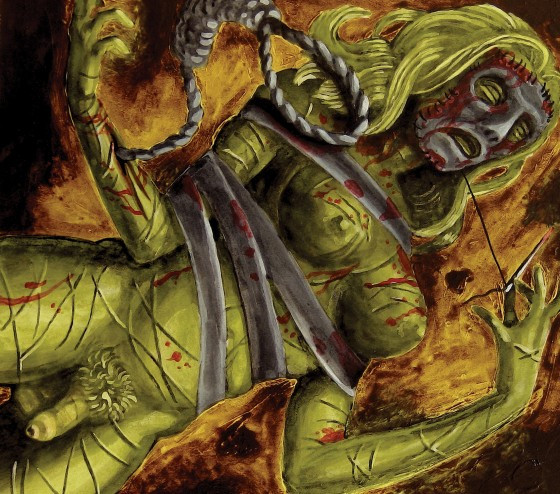
     "BLOOD. RUST. INCINERATE." rumbles Ken Sorceron on 'Possession Prayer' of Lord Mantis' twisted new outing Death Mask. The blackened sludge supergroup, whose macabre album cover (designed by Jef Whitehead of Leviathan) attracted controversy earlier this year, are not newcomers to the field of utterly disgusting music, with 2011's equally vile Pervertor eliciting similar reactions to anyone with a conscience. But while Pervertor's filthy sludge grooves and torturous, retching vocals were its ticket to success, Death Mask both refines the stage set by previous Lord Mantis outings and adds in a few tricks of its own.
      Notably, this comes in the band's decision to have the sound explore the more sinister aspects of its 'blackened' heritage, avoiding the dredging sludge lines of previous outings. Where Pervertor was pure sludge heaviness, Death Mask is a record that horrifies as well as disgusts, and to the band's credit they've managed to unsettle a fair amount of tried-and-true metal fans - who sat through Pervertor and came back howling for more.
      Industrial themes run rampant, adding to the bizarre, frightening atmosphere as guitar lines surge out in a terrifyingly sensual way. When all gives way to black metal chaos in 'Negative Birth', or the weird vocals of 'Coil', the portrait is complete and you're met with one of the most bizarre and morbidly beautiful sludge albums to come out this year.

4. La Dispute - Rooms of the House
    Genre: Post-Hardcore

      La Dispute's emotionally wrenching lyrics and dreamy instrumentation have made the Michigan post-hardcore act one of the most praised and beloved bands in the modern genre. Rooms of the House, the band's fourth full-length, thus, was unlikely to be a disappointment, but the band rose above that expectation by putting out their most powerful, cohesive and unforgettable record yet. Gone are Jordan  Dreyer's melodramatic, emo-cadenced cries of despair for love lost. Instead, Dreyer moves between an emotional yell and a tortured spoken-word delivery. Not only does this give Rooms of the House a more mature tone (which, when its content is compared to previous La Dispute outings, is completely correct), but it silenced the most common criticism the band faced - its vocals.
       Wildlife, the band's 2011 LP, troubled itself with people at the centre of societal decay, and while Rooms of the House is still a passionately sad album, this time around La Dispute have focused on the emotional weight of the aftermath of tragedy. Dreyer's poetically bleak lyrics serve as the perfect punch to the gut that lend this album its pervasive element of grief - and while the rest of the band's music moves between sadness and anger, technicality and obtuseness, it serves as the perfect backdrop for eleven passionately delivered diatribes on tragedy.

5. Monolord - Empress Rising
   Genre: Stoner Doom Metal

      When the dust clears from the fuzzy onslaught of Empress Rising's title track, it's hard to believe Swedish doom outfit Monolord is only a three piece. The trio craft such a massive, intricate, scathing-yet-psychedelic wall of noise that it seems impossible without at least another guitar. Empress Rising, by stoner doom standards, hits all the right notes square on the head - reverb-laden vocals spinning grandiose fantasy tales? Check. Riffs that recall elephants patiently marching in formation for nine minutes without getting old? Check. A drummer going apeshit in the empty space between the slow crush of the guitar-bass monolith? Check again.
       But Monolord's strength doesn't lie in their hashed-out worship of Electric Wizard and Yob, but in the execution of those bands' visions with the addition of a healthy dash of vintage psychedelia - the album opens with a hypnotic, sitar-like guitar riff that echoes and twangs its way out of existence - 'Harbinger of Death' does something similar and manages to make the bass sound like a Jew's Harp. The title track closes with distant flashes and squeals as the riff that carried the song through twelve minutes suddenly breaks down, layering guitars together before ultimately collapsing. 'Audhumbla', the following track, mixes the psychedelics into a groovy, meandering riff in what's the record most straightforward doom song - echoing Ufomammut's dark, abrasive early days.
       For as much as 2014 was a sludge year, doom has suffered the short end of the stick - but with Yob, Anathema, and Pallbearer releasing new records on the horizon, combined with Empress Rising it's entirely possible that 2014's doom metal will be a question of quality, not quantity.
      

6. Thantifaxath - Sacred White Noise
    Genre: Progressive Black Metal

      Every year, a handful of black metal bands make their debut with a fantastic full-length - Wormlust and Vattnet Viskar spring to mind as some of last year's best new black metal acts - and this year it was Toronto's Thantifaxath's turn to leap out of nowhere with a mind-blowing, almost math-rock like take on black metal. Emboldened by the acerbic technical prowess of acts like Krallice, Thantifaxath's debut is a tense burst of energy that combines the speed and rawness of black metal with a dose of dissonance.          Sacred White Noise is a high speed journey that continuously finds new ways to surprise me.
 Despite tremolo picking being the centerpiece of their songwriting, Thantifaxath layer guitars upon each other in what could almost be a post-black move - except it's utterly void of post-rock's frivolity. This is nose-to-the-grindstone insanity as the band howls and hisses through six pitifully brief songs. Most of Sacred White Noise feels wonderfully off-kilter - like the listener is losing their balance as the band veers precariously-yet-purposefully through nooks and crannies. The previous comparison to Krallice is not quite fair - and while their influence on Thantifaxath is undeniable, Sacred White Noise is 100% its own beast, and well worth a listen for any black metal fan.
   

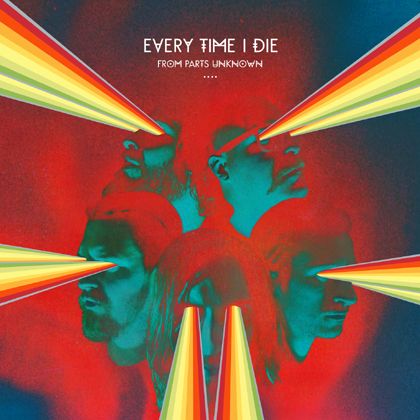
7.  Every Time I Die - From Parts Unknown
     Genre: Metalcore/Noise Rock

     Idiot in Remission writing about Every Time I Die? Unheard of! In any case, the Buffalo act's eighth full-length From Parts Unknown, represents a return to form that most fans have been waiting for since 2005's Gutter Phenomenon. From Parts Unknown sees the band re-exploring their chaotic noise rock roots and melding them with the refined vocals and sensibilities of their more recent metalcore efforts. Parts is a swaggering, sneering douchebag of a record - even the soulful Southern cleans of 'Overstayer' manage to sound vicious and barely restrained.
       The record's strength, however, isn't just a question of bringing back an old sound - From Parts Unknown saw the band examining their own discography for what they did best and shoving it all into a twelve-track, blistering 33-minute odyssey. The noise rock riffing is only one aspect of it - Andy Williams and Jordan Buckley slip Southern stylings into the guitars, and 'Moor', which begin with a clunking, dissonant piano, ratchet up the sense of inebriated chaos the band have been purveying from the beginning. At the end of the day, From Parts Unknown may be the year's finest metalcore outing yet, and it certainly ranks up there with the band's best.

8. Idylls - Prayer For Terrene
    Genre: Powerviolence

      Saxophones? In a powerviolence record!? Yes, you read that right. Australia's Idylls, who back in late March released their sophomore full-length Prayer For Terrene are known for purveying a sonic mess of hardcore, post-punk, and noise rock into a twisted amalgamation of pulverizing dissonance. And yes, saxophones shriek and whistle to dramatic effect almost at random as Prayer For Terrene blows itself to pieces. At twenty-seven minutes, the record is incredibly short, but the band manage to move tightly and insanely through so much noisiness and formless chaos that Idylls' 'hardcore' label seem more a courtesy than an established classification. But as noisiness yields to post-punk melancholy on 'Fagged Out on the Beach', before returning to punkish chaos in 'Animal Test', the record's penchant for sudden, inexplicable insanity shines that much brighter.
         Prayer For Terrene is a formless, seething, blistering record that gets more fun with every listen. It's an excellent followup to the band's 2012 debut Farewell All Joy, and sees the band navigate the mire of noisy, chaotic punk with skill and taste.

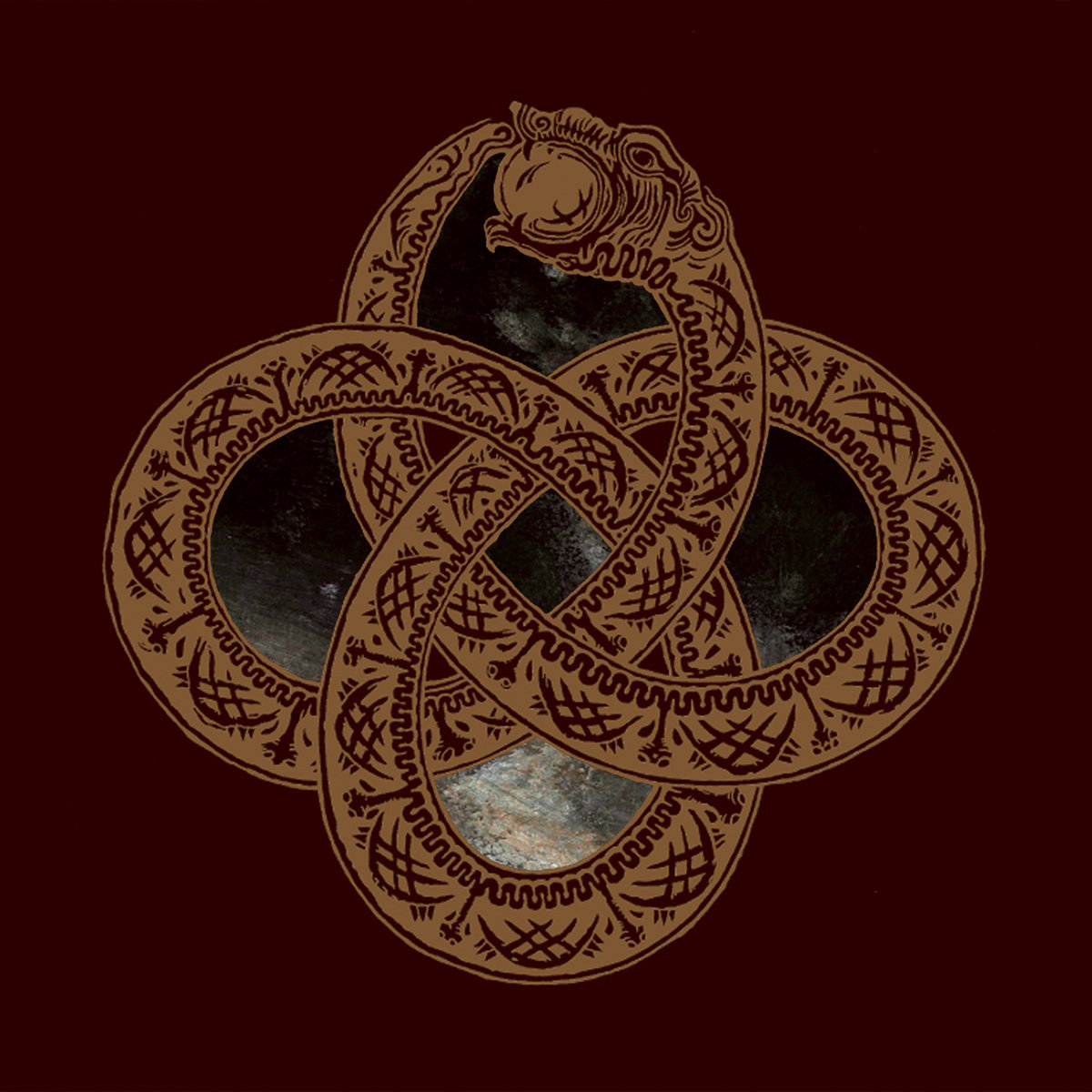
9. Agalloch - The Serpent and the Sphere
    Genre: Atmospheric Black Metal

     The Serpent and the Sphere, coming four years after Agalloch's last full-length Marrow of the Spirit and two after their crushing 22-minute one-song EP Faustian Echoes, is the band's most bizarre, introspective, and arguably atmospheric release yet. While previous Agalloch records opened with a burst of wind, 'Birth and Death of the Pillars of Creation' moves at a majestically slow pace, building on itself as acoustic guitars fade in and out, and John Haughm's sparse, but grating vocals set the tone for the rest of the record - allowing the wonderfully dark sylvan instrumentation to utterly encapsulate.
     That's not to say Serpent is a completely effervescent, head-in-the-clouds affair. While its post-rock tinged folk leads serve as the band's mainstay this time around, the commanding riffing of 'The Astral Dialogue' or 'Vales Beyond Dimensions' serves as a contrast to the rest of the record's delightfully minimalist songwriting. Despite seemingly appearing out of nowhere, Serpent is very much a synthesis of Agalloch's previous outings - in the acoustic calm of '(Serpens Caput)' or closer '(Serpens Cauda)', there's a hint of the band's White EP, while 'Dark Matter Gods' or the aforementioned 'Astral Dialogue' absolutely scream Ashes Against the Grain. Yet, for as familiar as some of the songs on Serpent get, the record remains unmatched in its sheer sense of introspection - perhaps lacking the definitive, tormented-soul punch of Marrow of the Spirit - and in this regard Agalloch have created an album that has taken many fans aback. Serpent is not a kinetic, dynamic woodland journey, but a more personal, meditative trip.


10. Swans - To Be Kind
      Genre: Post-rock/Art Rock

      And my journey to hipsterdom is officially complete - although I feel as though a metal fan being a Swans isn't totally unheard of. Ever since their return in 2010, New York's seminal No Wave masters Swans have shifted their tone to an equally dissonant, but highly atmospheric approach that almost echoes post-rock in its vast, droning soundscapes...but if you go into any of Swans' newest records expecting the piercing ethereal beauty of a Godspeed cut, you'll be sorely mistaken. Nowadays, Swans explore a dark, eerie sound that's singularly unheard of in modern post-rock circles.
       To Be Kind, when compared to modern Swans' two previous records (2012's The Seer and 2010's My Father Will Guide Me Up a Rope to the Sky), plays up the more mysterious, discordant textures that the band have been refining in their modern incarnation, and while To Be Kind is a tad more accessible (for a post-rock listener) than The Seer, this comes slightly at the cost of the interest factor. The band's instrumentation, including Michael Gira's vocals are, as usual, cryptic, haunting and spot-on. But To Be Kind's biggest drawback is its length - at nearly two hours, like The Seer, the record immediately becomes that much more monolithic and insane - beautifully contrasted with the kitschy, innocent baby faces that adorn the album cover. The atmosphere of To Be Kind is wonderfully bizarre - ranging from quiet and introspective on 'A Little God in My Hands' to thunderous and epic on the title track, which closes the album. That Swans are talented songwriters is no secret, but the sheer dearth and consistency of To Be Kind shows the band at an all time high.

HONORABLE MENTIONS:

Diocletian - Gesundrian
Eyehategod - Eyehategod
Indian - From All Purity
Svartidauði - The Synthesis of Whore & Beast
Temple Desecration - Communion Perished
Nothing - Guilty of Everything
St. Vincent - St. Vincent: 
Alcest - Shelter
Cursed Altar - The Light Shall Die
Young and In the Way - When Life Comes to Death 
Twilight - III: Beneath Trident's Tomb
USA out of Vietnam - Crashing Diseases and Incurable Airplanes
Wife - What's Between
'68 - In Humor & Sadness
Wreck & Reference - Want
The Great Old Ones - Tekeli-li
Woods of Desolation - As the Stars
Neige et Noirceur - Gouffre Onirique Et Abîmes Cosmiques
Triptykon - Melana Chasmata
The Body - I Shall Die Here


UPCOMING RELEASES (that I'm excited for):

Opeth - Pale Communion
Ides of Gemini - Old World New Wave
Earth - Primitive & Deadly
Yob - Clearing the Path to Ascend
Pallbearer - Foundations of Burden
Yes - Heaven & Earth
Wolves in the Throne Room - Celestite
Wormlust - Hallucinogenesis
Giant Squid - Minoans 
Solstafir - Otta
Nachtmystium - The World We Left Behind


Thursday, June 12, 2014

Solstafir release new song!


           After a run at Maryland Deathfest last month, Icelandic post-metal spellweavers Solstafir have released the title track from their new album Otta, which is due out September 2nd via Season of Mist. At nearly ten minutes, 'Otta' (the song) sees the return of the band's characteristic distortion-free heaviness - and the delicate atmospheric textures that the band have been perfecting since 2009's magical Köld. But as violins layer over gently sung vocals and clean guitar near the end, it's clear that Otta may see the band embark in a decidedly more post-rock direction, away from the more dynamic sound they debuted on previous records.
          Regardless of whether or not the song is indicative of what the new record will sound like, Otta sounds great. You can stream it on Stereogum here.

Wednesday, May 28, 2014

Another new Every Time I Die song, 'Decayin' with the Boys', has been released


           Lambgoat has a new Every Time I Die song up for streaming! 'Decayin' with the Boys' is a slower, less crusty affair than 'Thirst', which debuted last week, but it's still chock full of the Buffalo act's trademark southern riffs and raise-your-beer-and-sing-along one-liners, this Keith Buckley's screaming 'Salvation is a hell of a thing!'
           Stream the new song here.